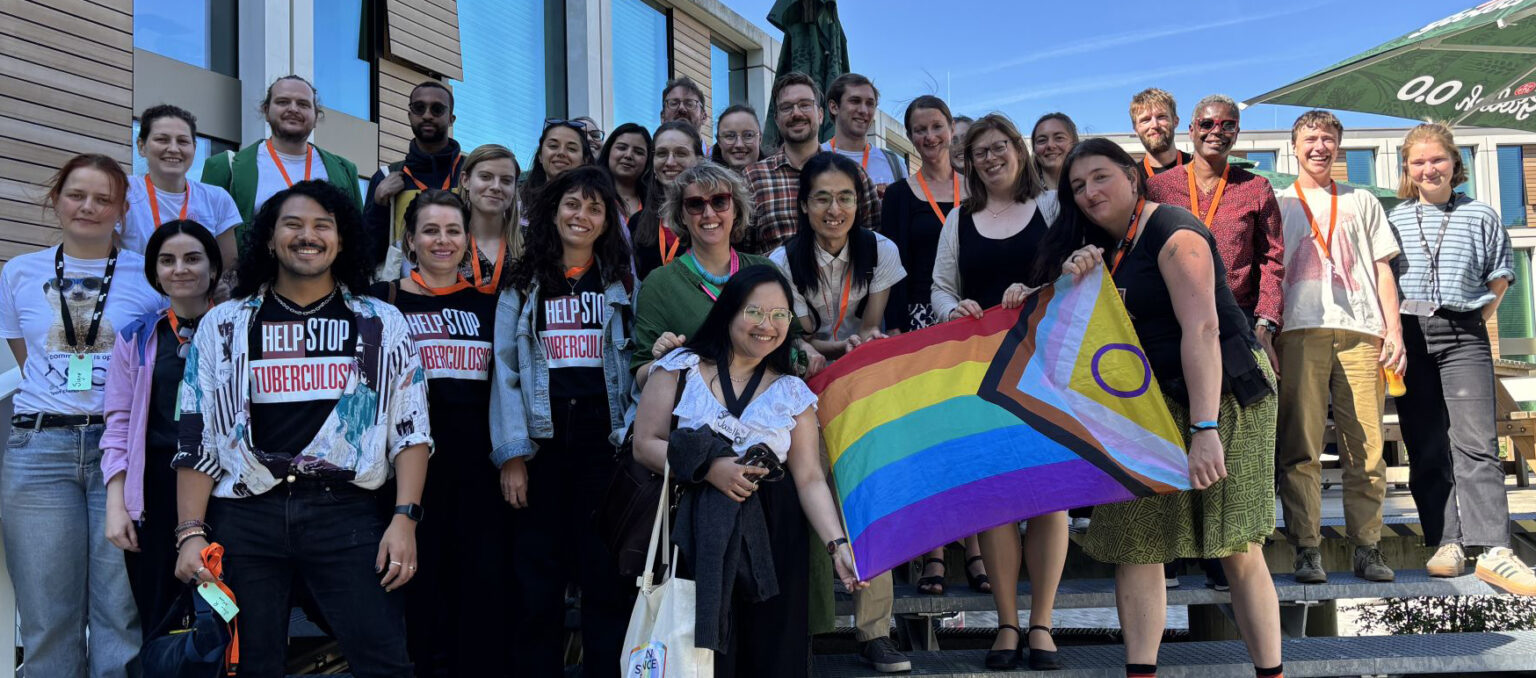
This event is intended as a follow-up to Making scholarship look like the world looks—A day on Openness, Equity, Diversity, and Inclusion in Academia DOI: 10.53962/gm68-f72c.
We think it's important that the event was not a one-off, and we continue the success and momentum generated by the previous event. There are many ways implicit bias can enter the research cycle, from choice of topics, the data lifecycle, grant allocation, scholarly publishing, and university policies; which is why it is important that the system conducting and evaluating scientific research is as transparent, diverse, and inclusive as possible.
Tentative schedule
Arrival and tea/coffee
Arrive and have some tea or coffee before we begin
Welcome
Brief introduction to the day
Workshops round 1
First round of workshops
Lunch
Workshops round 2
Second round of workshops
Panel discussion
Is the Open Science movement reforming how we engage with diversity, equity, and inclusivity in academia, or is it just reproducing the same power imbalances as before?
Wrap-up
Wrapping up the day and final remarks
Mingle and meet
Eating, drinking, and nice conversation.
Responses are stored in a private CryptDrive on the flagship instance of CryptPad (cryptpad.fr), and only accessible to the organisers of this event. Data are encrypted and stored in France. Your data will be removed within six months following the event.
Use this link if you cannot see the embedded form.
The event will be held at TU Delft in building X (no, that's not a placeholder).
Building 37
Mekelweg 8
NL-2628 CD Delft
+31 15 278 24 42
Floor plan
Getting there
From Delft Central Station you can take busses 40, 69, or 172 to Berlageweg, Delft. The bus stop is right in front of the venue.
Tramline 19, which (will) run from the Central Station to TU Delft is scheduled to be complete in the summer (but I will believe it when it starts taking passengers). More information will follow.
Delft Campus station is closer to the venue but, to my knowledge, there are no convenient busses going to the venue. It is a 20-minute walk.
For information on parking, see the TU Delft Campus website.
Accessible parking is available at X, on Balthasar van der Polweg. See the TU Delft Campus map for more information.
This workshop will form an interactive primer in behavior change science, furnishing you with the basic understanding of the causal-structural chains that form the core of behavior change. We will do this at the hand of acyclic behavior change diagrams (ABCDs), a tool that helps you map what needs to change to make science more diverse and how you plan to make those changes.
This workshop will introduce what data models are and how they are created, beginning with a brief historical overview of different modelling approaches. Using accessible examples such as the data models behind tic-tac-toe, chess, and weather systems, we will explore how structured representations of information are designed and how model training works in practice. The session will then consider how biases within large language models can affect minority groups, alongside the broader question of who owns and controls the training of these systems. Particular attention will be given to why it is important that the development and training of such models are not left solely in the hands of large technology companies.
The Open Science movement started from an ideal to share scientific knowledge, making it accessible to everybody around the world. This was further elaborated in the UNESCO Recommendation on Open Science with its call to make knowledge accessible as well as ensuring that its production is inclusive, equitable, and sustainable. Citizen Science seeks to address these recommendations, however, implementing these ideals is challenged by the deep inequalities that exist in our societies. In this workshop, the principle of Leave No One Behind (LNOB) will be briefly introduced followed by a discussion on how participants understand this and the challenges to implement it. Through a couple of hypothetical cases, we will collectively reflect on how LNOB can guide citizen science.
David Abbink will talk about ED&I from the perspective of fostering emancipation of workers, for innovating their heavy physical work. Co-creation is sometimes easier said than done, but lies at the heart of his efforts at FRAIM around shaping the future of work, with and for workers. He will talk about his personal experiences and difficulties in learning how to listen and when to speak up, and draw on his experiences at FRAIM around trying to include workers as equal partners in innovation and academic research. Topics will include dealing with power dynamics, reciprocity, productive confrontation, aligning values, group dynamics, personal development and the difficulty and excitement of starting and sustaining deep collaboration between people with different perspectives.
Open science communities are, paradoxically, some of the most homogeneous communities in academia. Enthusiasts cluster together, share a common vocabulary, and - often without realizing it - design engagement activities primarily for early-career researchers familiar with technical and digital norms. Existing inclusion efforts often borrow a DEI logic of making communities more welcoming while overlooking the structural constraints shaping participation across career stages. This is particularly visible in the SSH, where open science norms are less established and qualitative, sensitive, or community-based data can make standard prescriptions feel disconnected from researchers' experiences. This session starts from the idea that pathways tailored to researchers' career stages, expertise, and existing practices may be key to participation despite growing institutional support. The workshop explores two questions. How do we engage skeptical or disengaged colleagues, not by persuading them that open science matters, but by meeting them where they are? How do we design open science training and leadership development that is genuinely inclusive of all kinds of researchers, not just theoretically open to them?